Procedural Succulent Pot Texture
A procedural texture project creating photoreal pot texture. Responsible for procedural texture, and lighting using Houdini render with Redshift and composite lighting in Nuke.
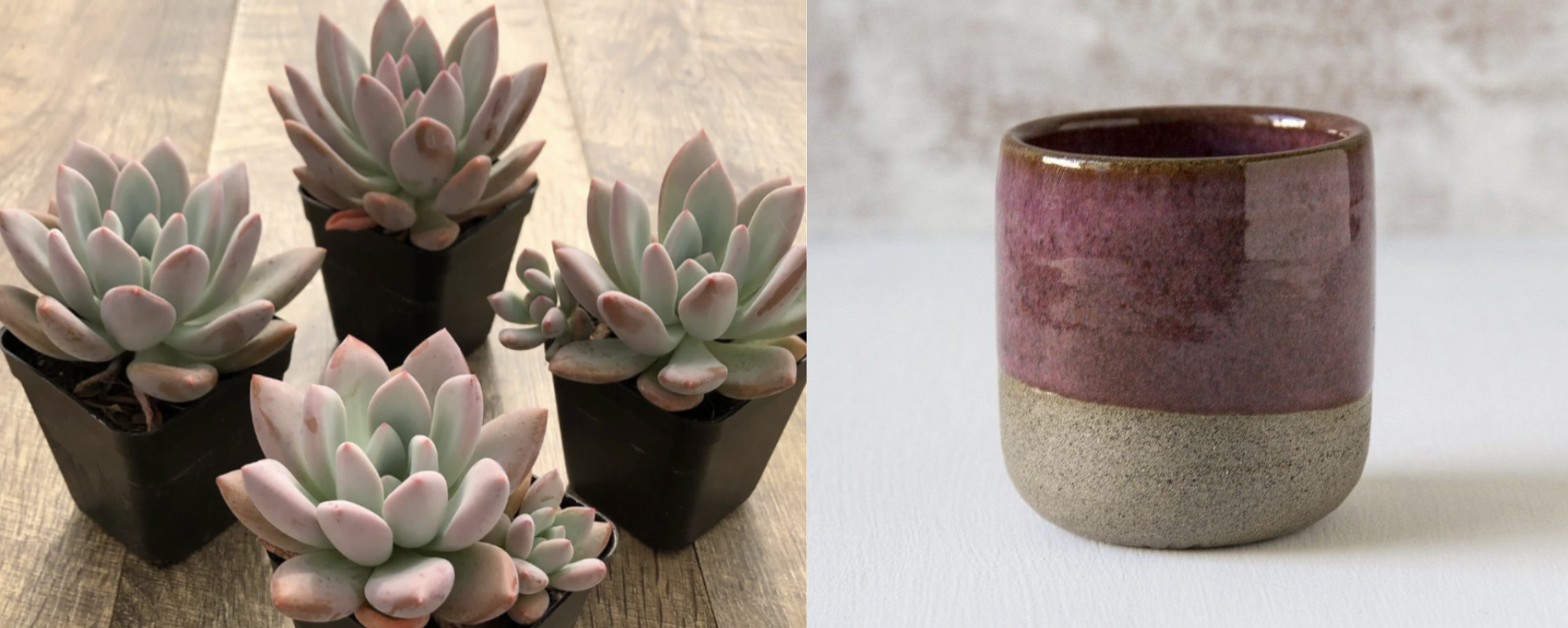
Reference
Breakdown - Pot
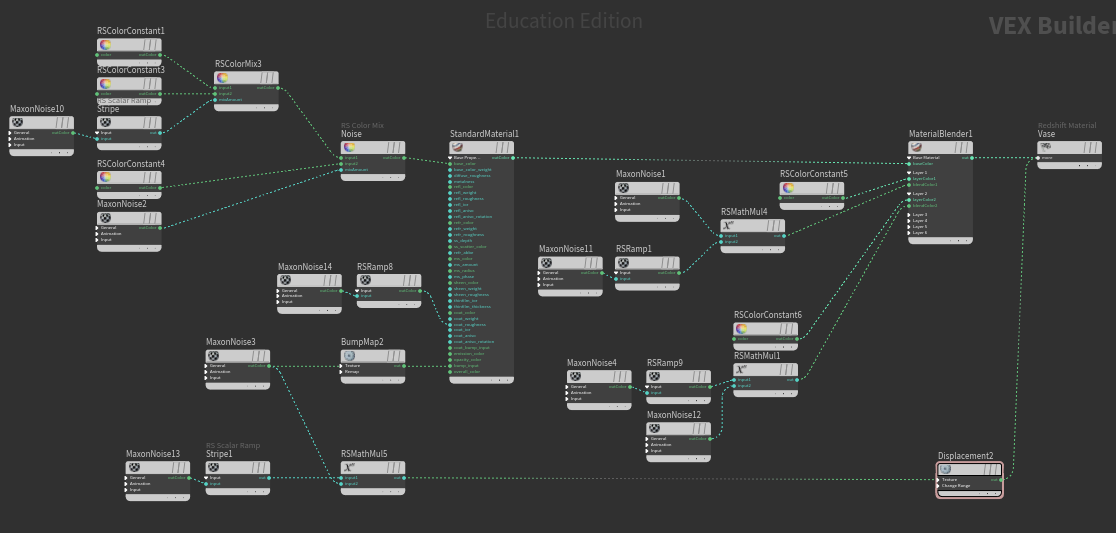
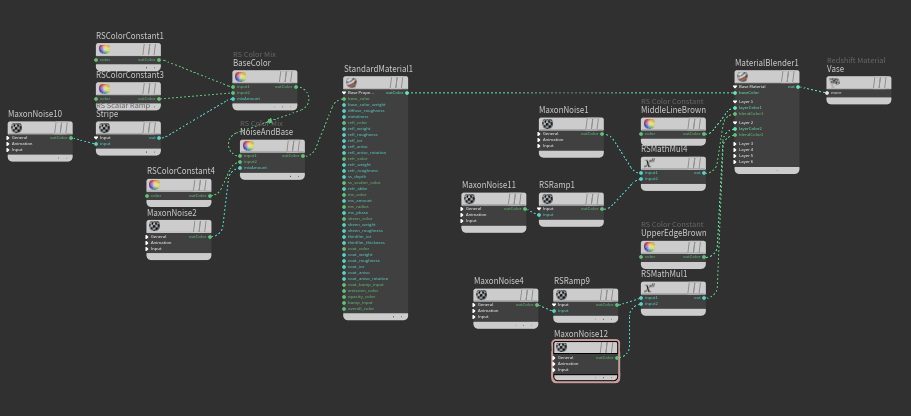
overall node setup
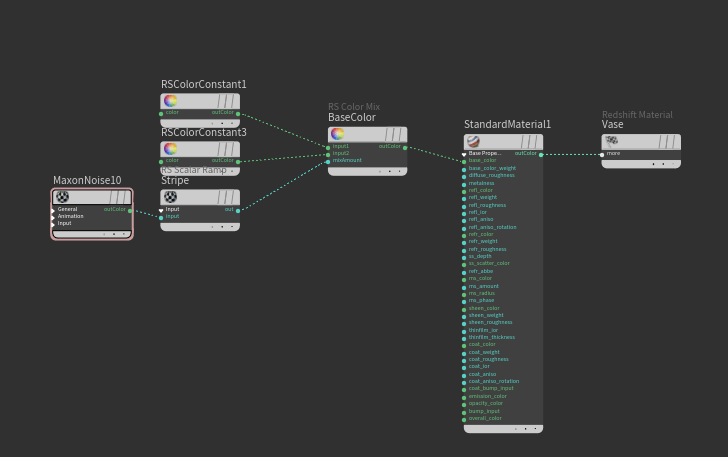
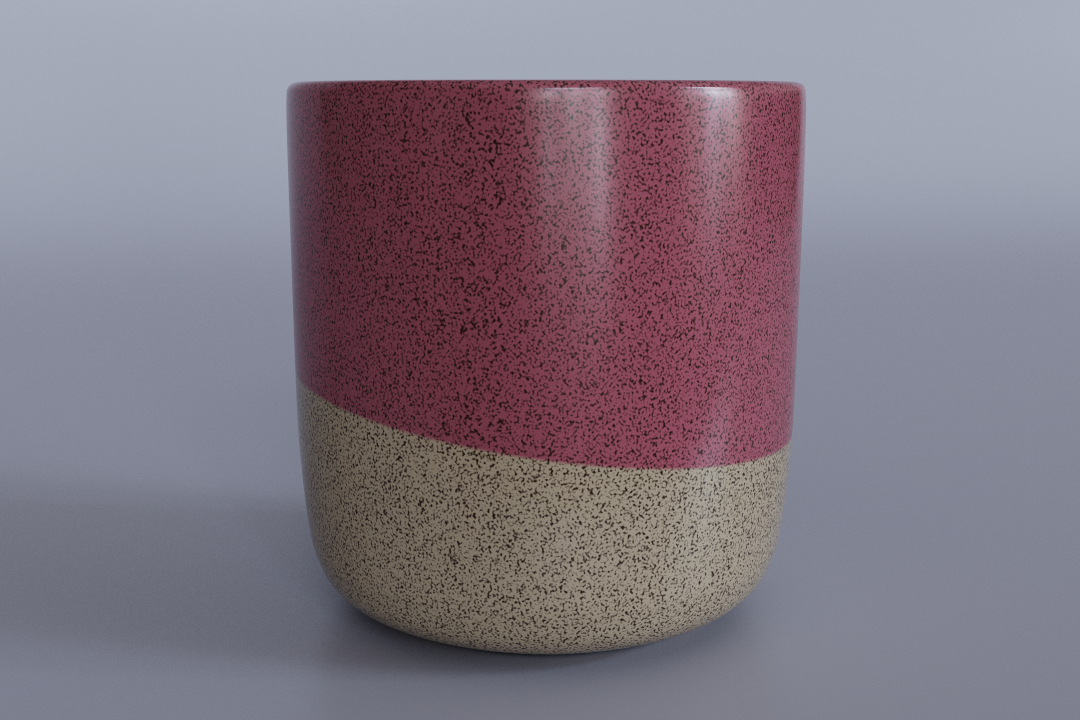
Base color
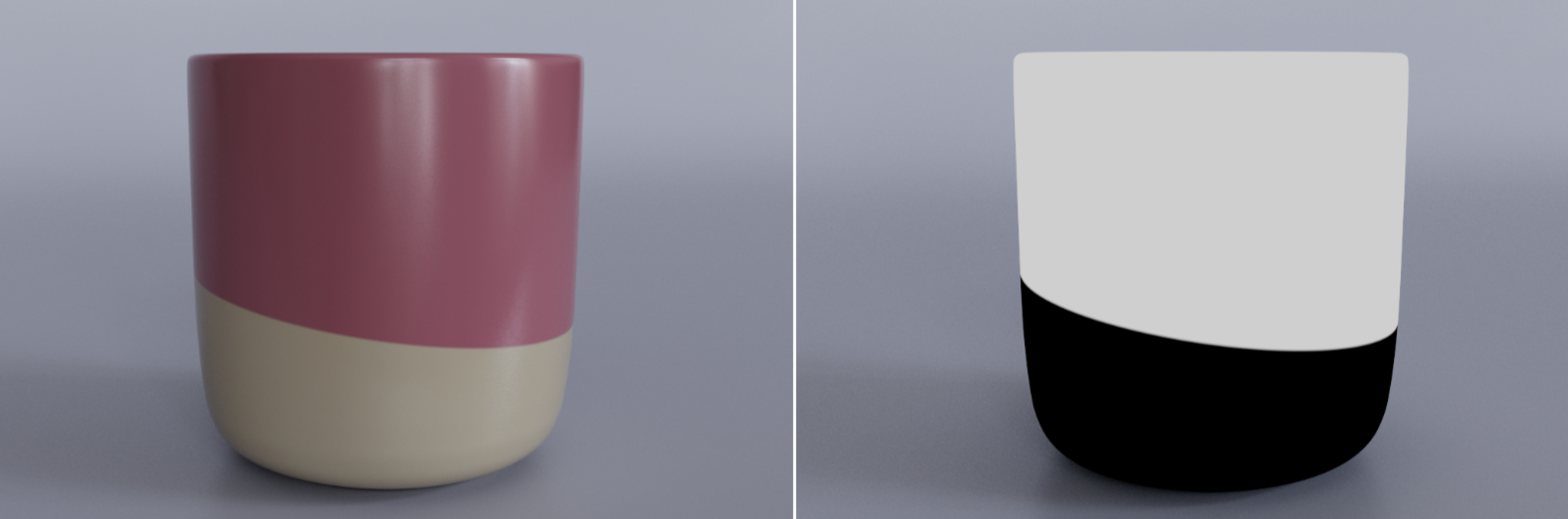
Noise node is used to create a curve line as a mask to separate the two colors and ramp controls the area of two colors.
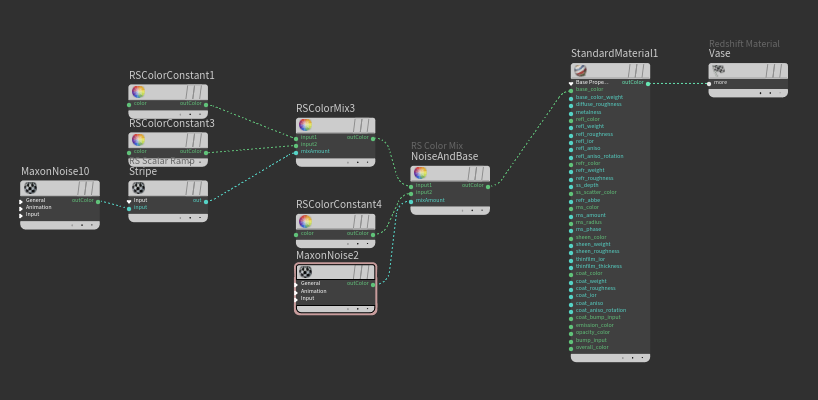
On top of the base color, brown noises cover both colors so another noise node is mix with base colors through RS ColorMix
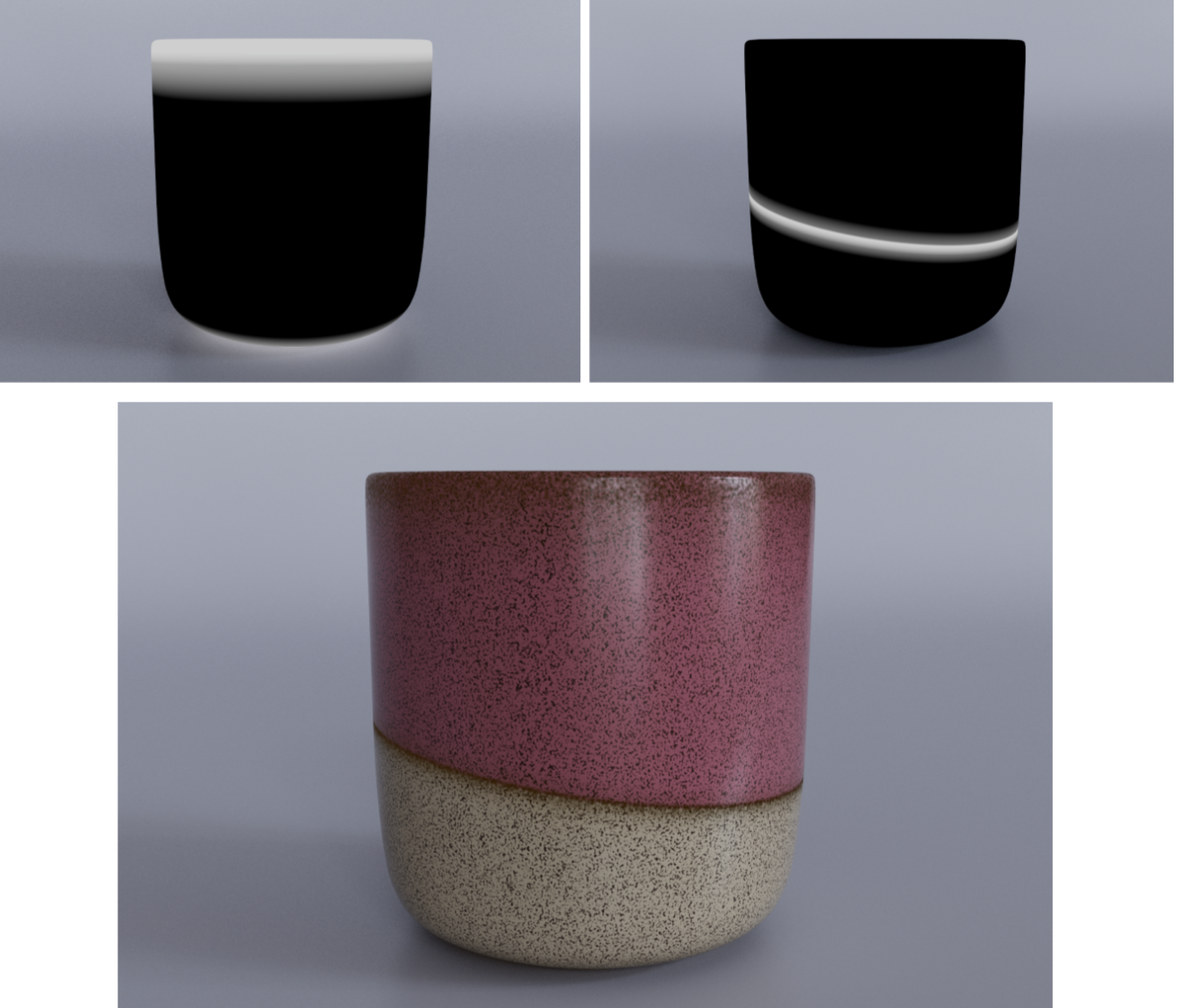
Brown Gradient on the Edge
Those nodes were connected to standard material and blended with brown lines using Material blend. There are two brown lines on top of the base color; one on the edge of the vase and separating the two colors in the middle of the vase. The edge of the vase separate with the middle line since the line in the middle can use the ramp from the base color node
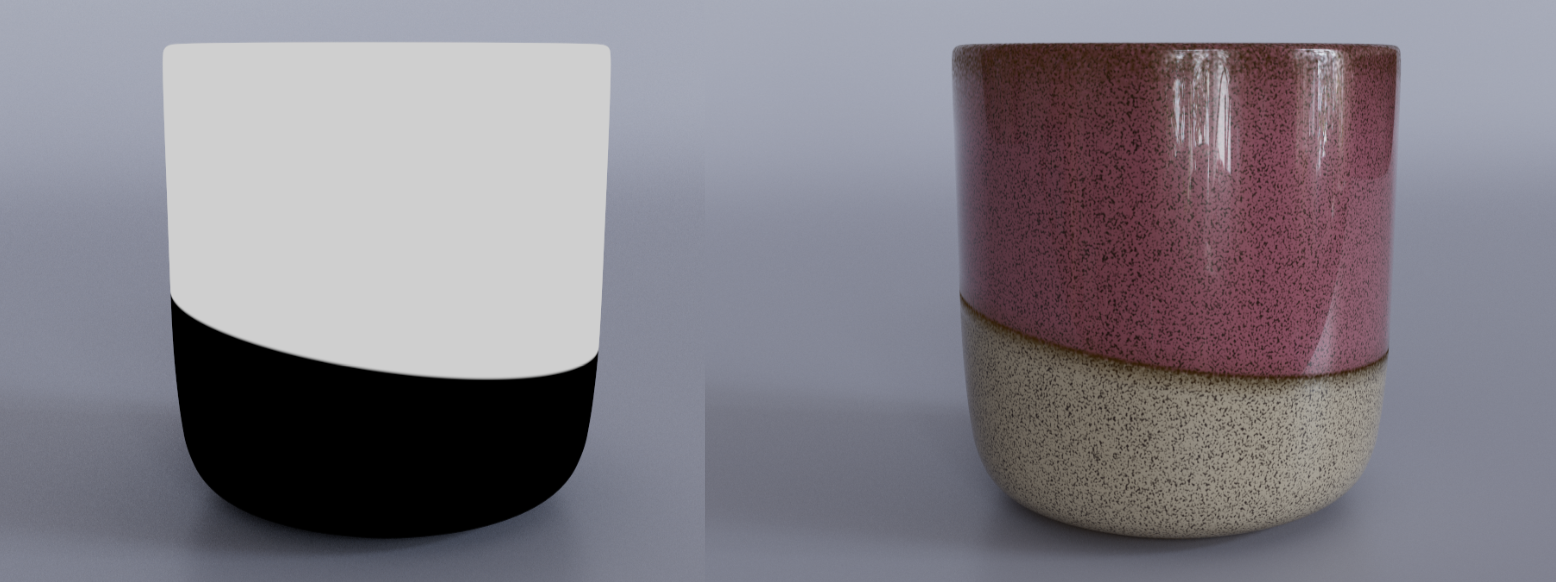
Roughness difference
The same ramp from base color is used for coat roughness to make the pink part glossier than the white part, separating the two materials.
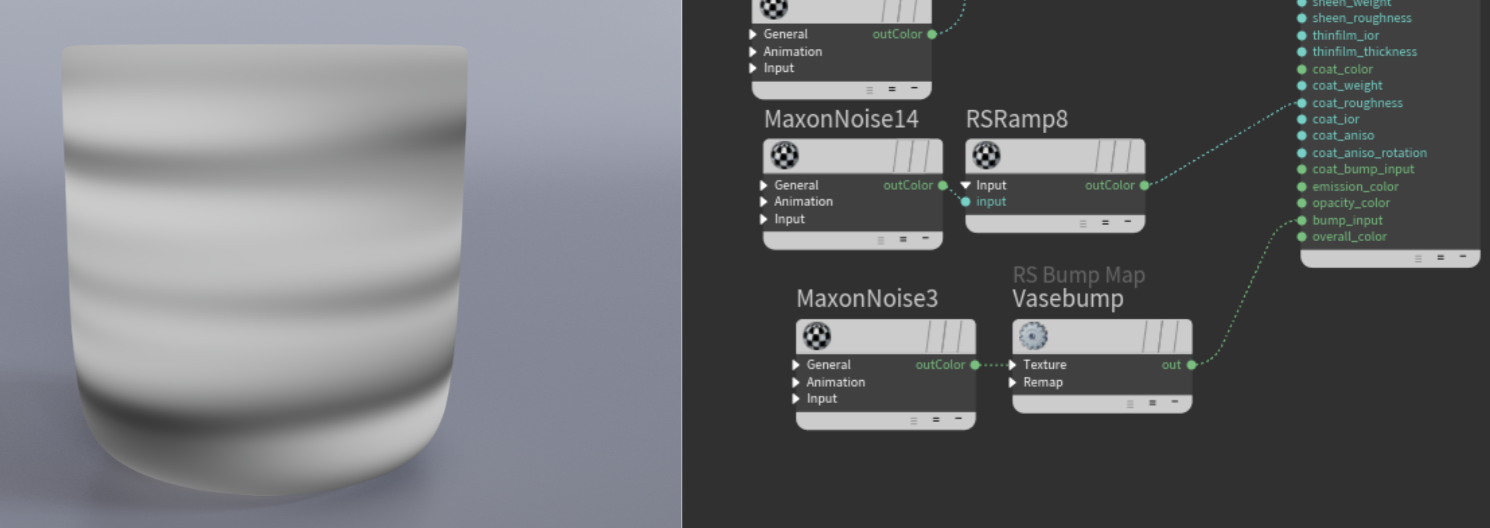
Bump
For the bump map, a Noise node is used to create a horizontal mask and connect to the bump node.
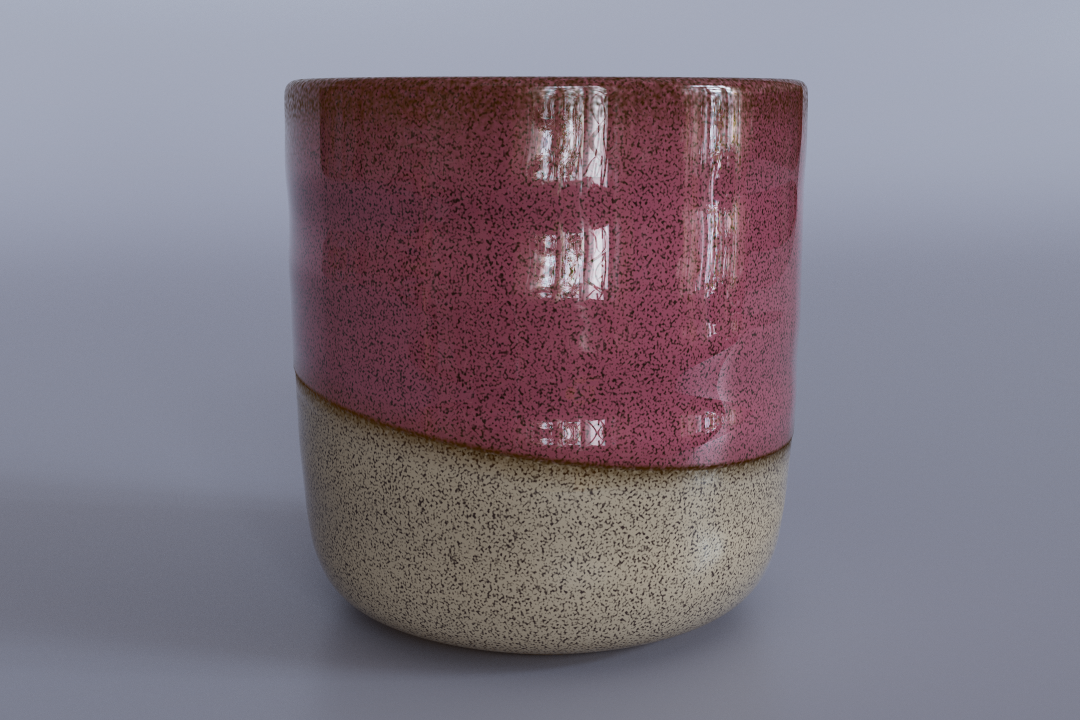
Final pot texture
Breakdown - Leaves
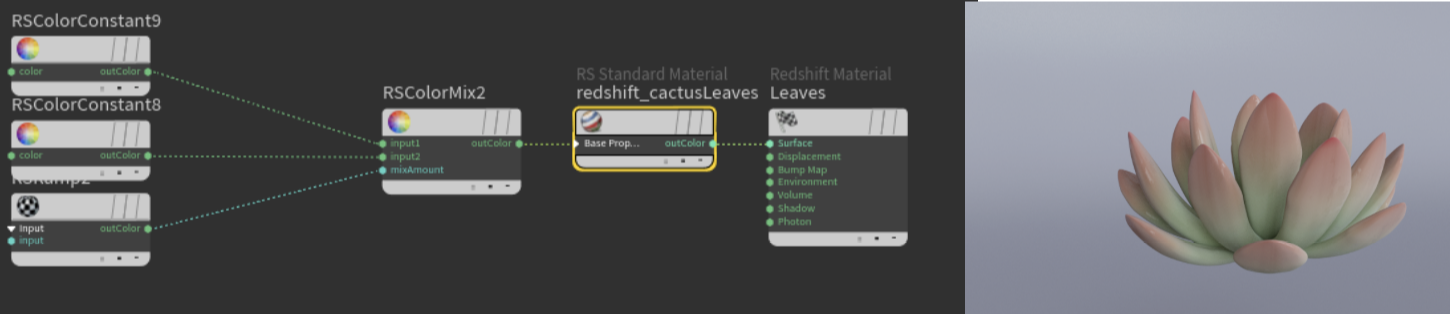
Base colors of the leaves are gradient from green to pink-ish red so the ramp is used to control the gradient of the colors
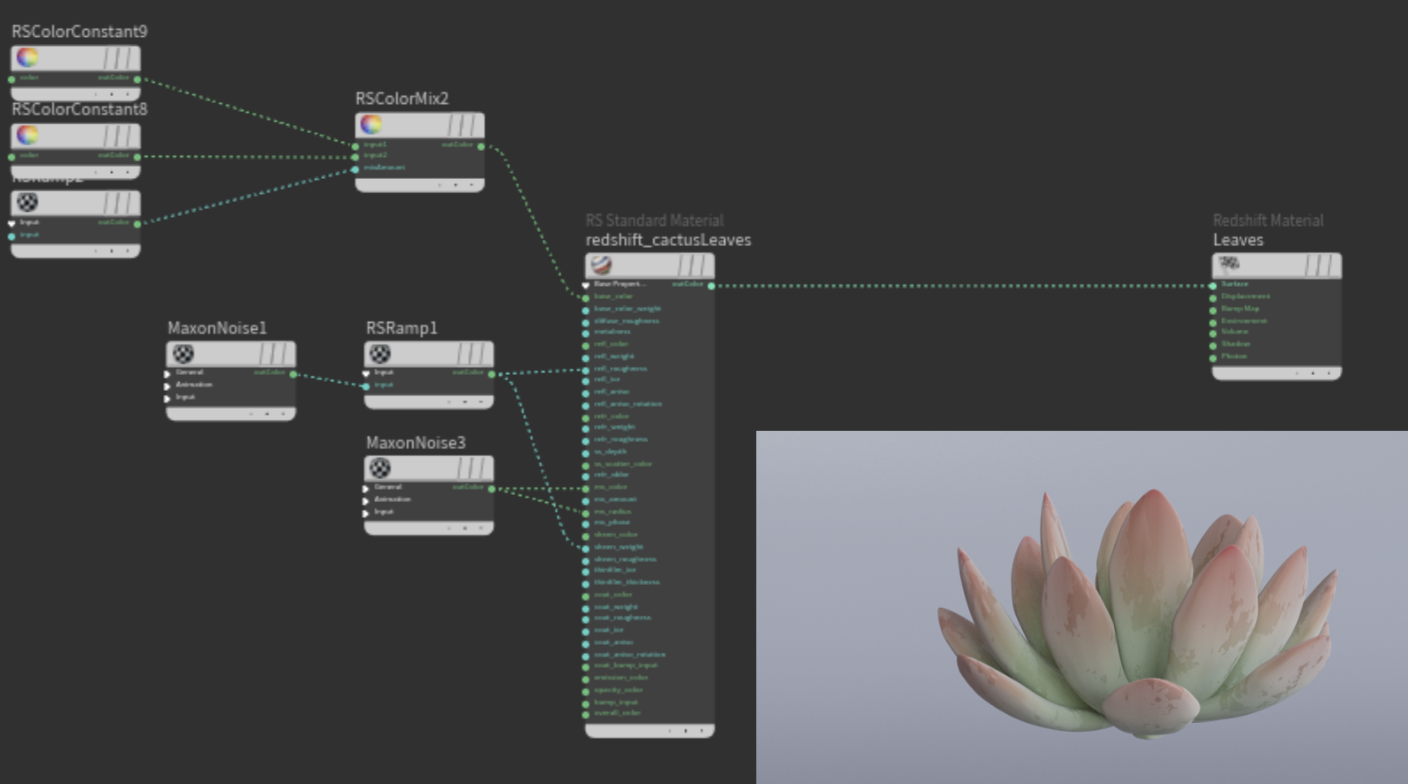
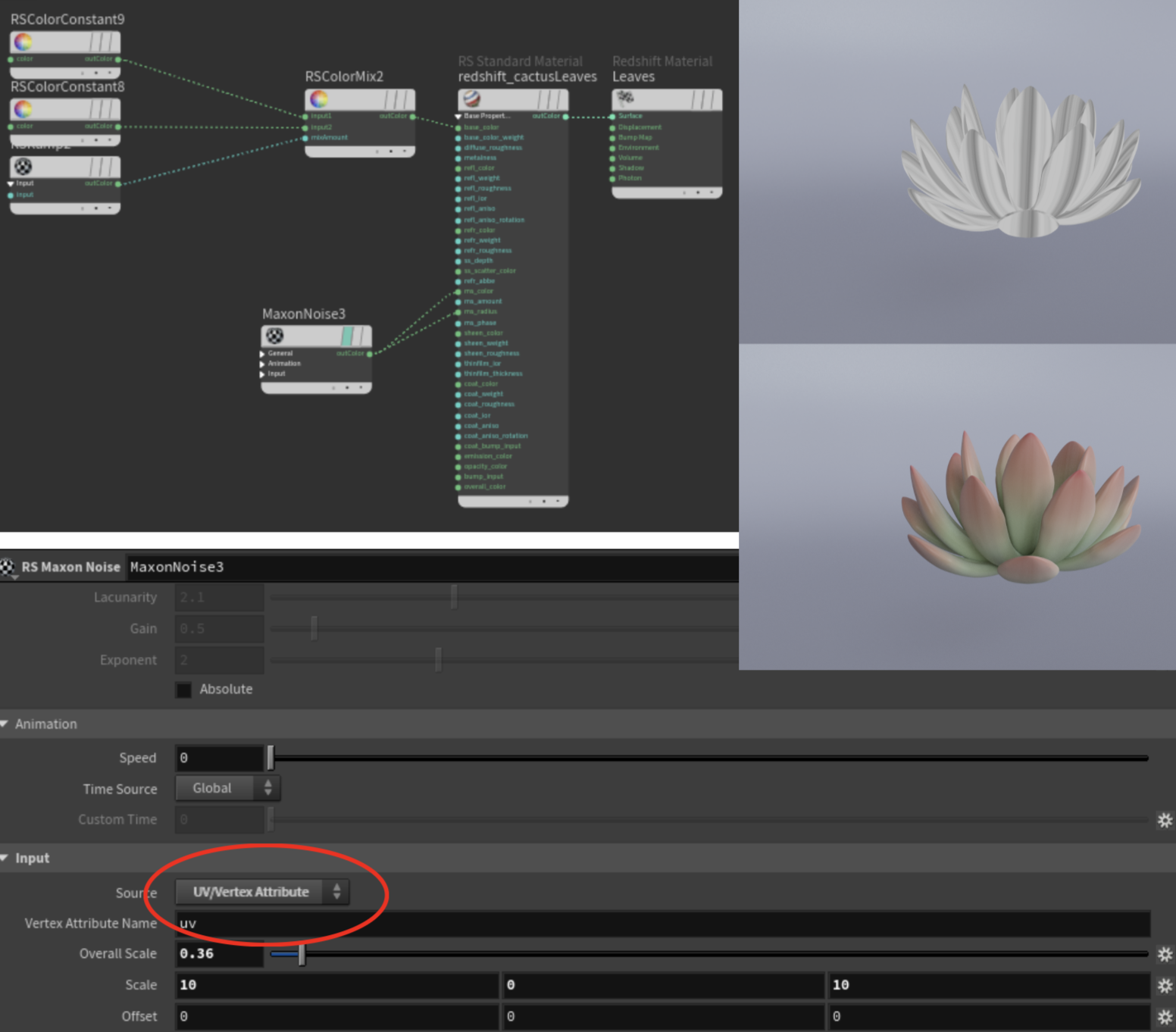
From references, the leaves don’t show any patterns like other succulents, but there are some subsurfaces on the side of the leaves, so I used UV based vertical noise node and connect to Subsurface
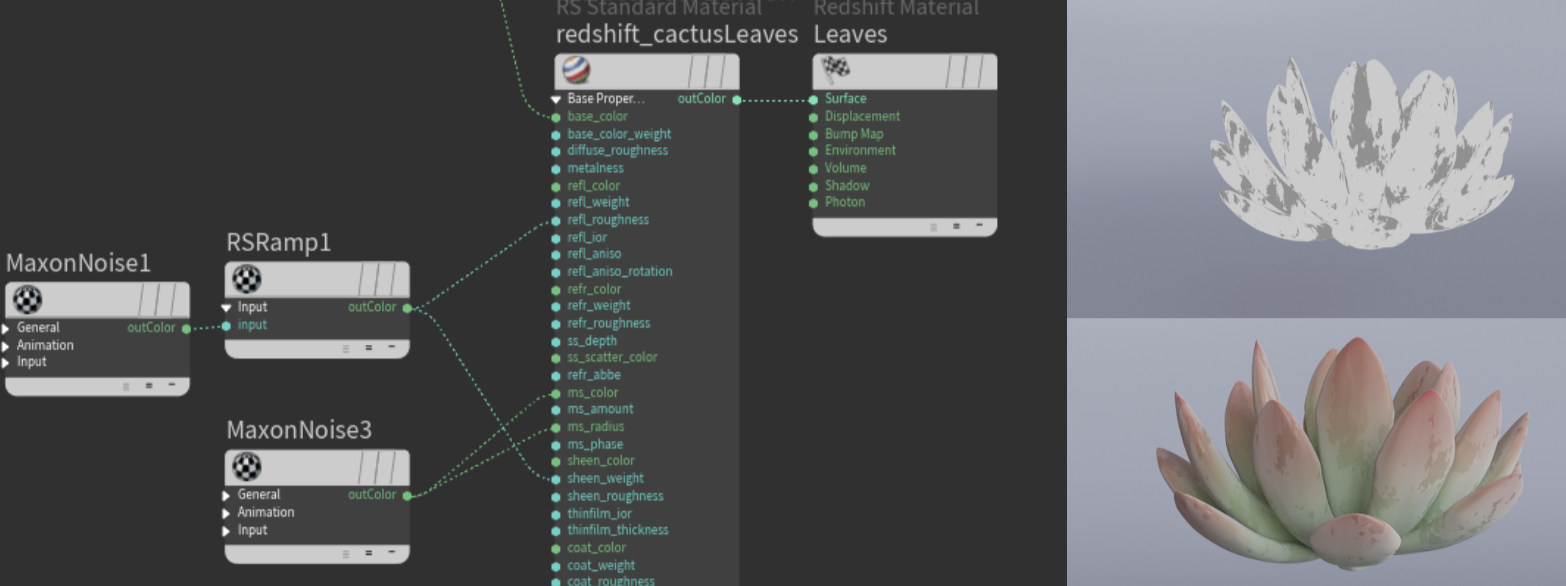
To be able to replicate the scratches and irregular pattern on the leaves, I use noise and ramp then connect to sheen and roughness to be able to control the areas that are more shiny
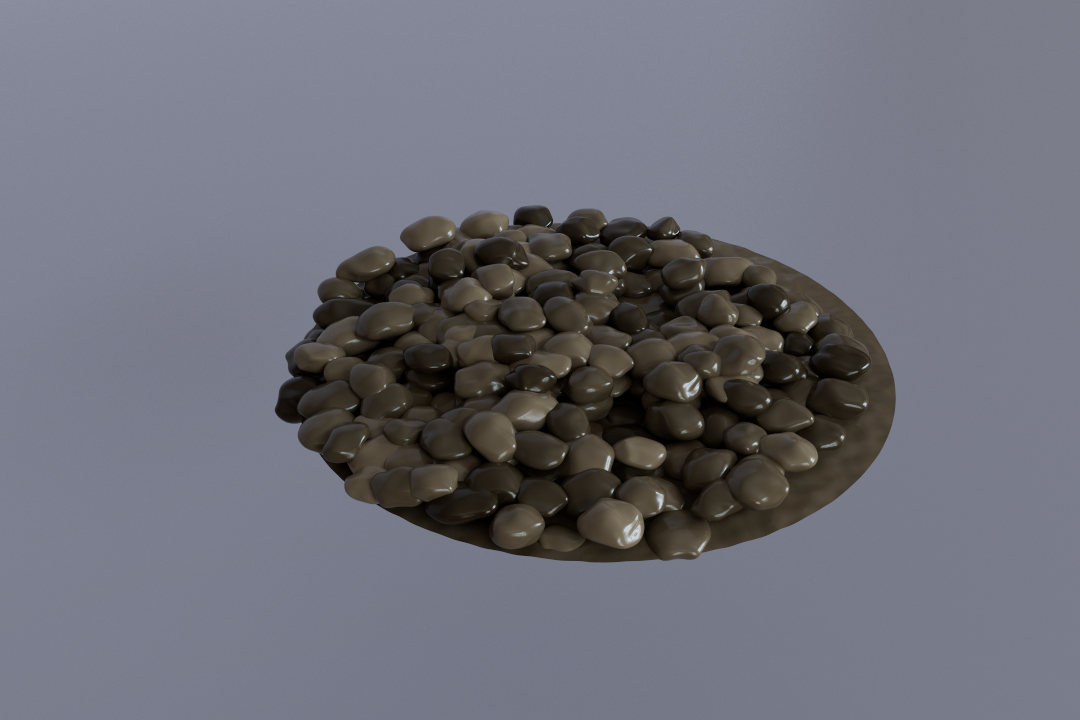
Breakdown - Stones
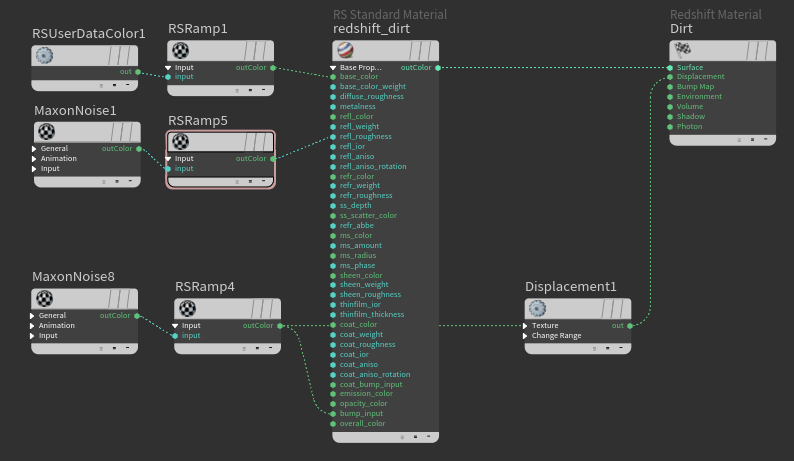
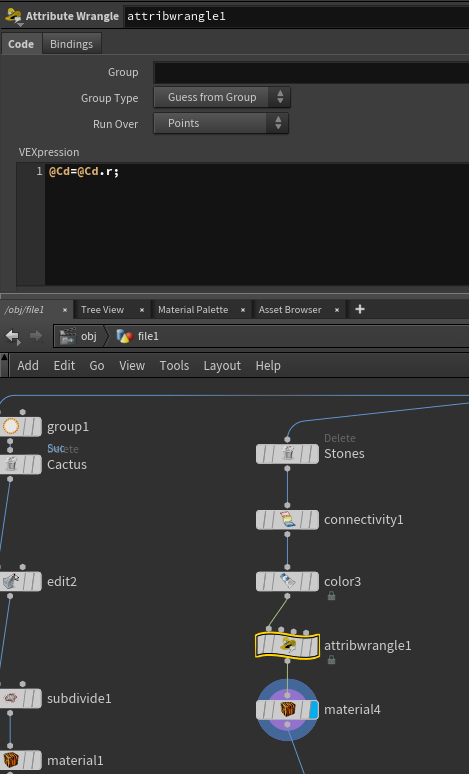
Random color for stone using attribute wrangle node in the object level to assign random shades in the stone. Cd usercolor node is connected to the standard material node.